
Promoting Understanding of the Advance Decisions on Life-Sustaining Treatment Ordinance through Community Seminars

The Jockey Club End-of-Life Community Care Project and the Jockey Club End-of-Life Community Care Project: Unison Project, in collaboration with the Health Bureau, successfully concluded a seven-session public seminar series on the Advance Decisions on Life-Sustaining Treatment Ordinance in mid-June 2026.


Held in various districts across Hong Kong, the seminars attracted more than 1,000 members of the public. Representatives from the Health Bureau and the Hong Kong Society for Palliative Medicine provided detailed explanations of the Ordinance, including the format of advance directive documents, their drafting, revocation and enforcement requirements.
During sessions designed for caregivers of persons with disabilities and rehabilitation service staff, participants showed particular interest in how the wishes of mentally incapacitated individuals may be respected and reflected when they are unable to express their preferences regarding medical treatment. Questions were also raised about the practical assessment of whether an individual possesses the mental capacity required for discussions relating to advance care instructions and Do-Not-Attempt Cardiopulmonary Resuscitation (DNACPR) orders.

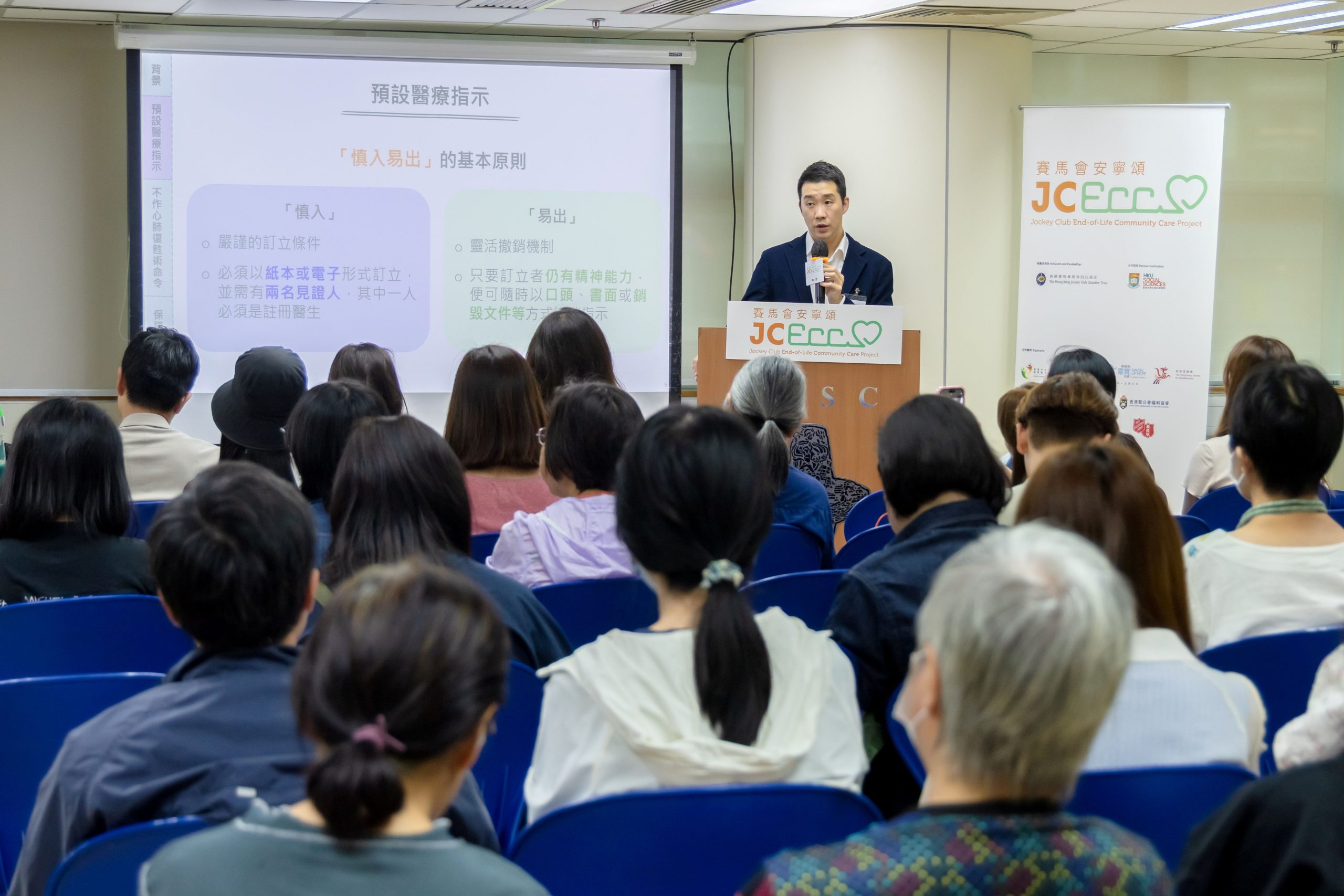
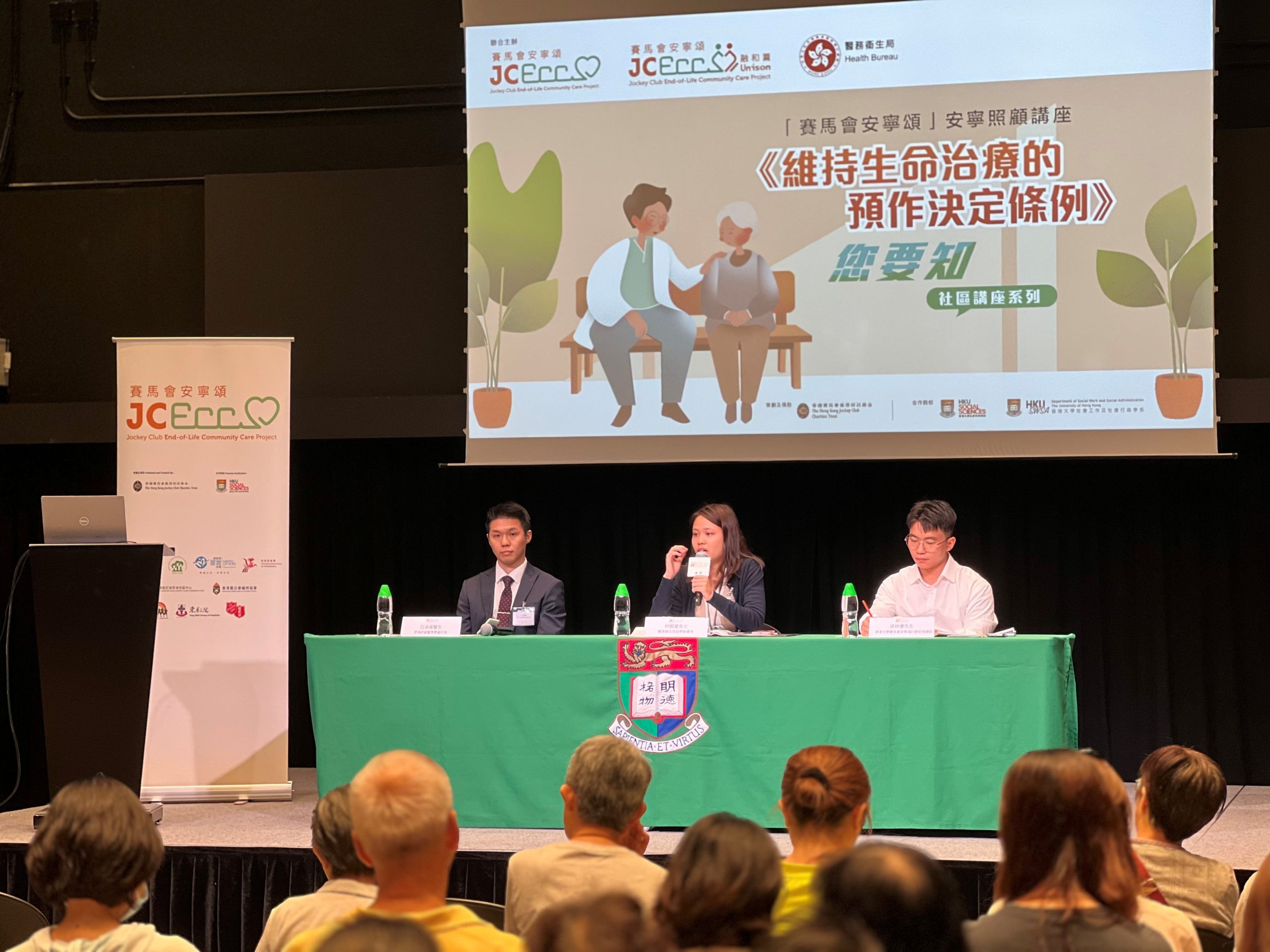
As the Ordinance also covers arrangements for home death, frontline staff from residential care homes raised a range of questions and concerns regarding legal responsibilities and implementation procedures. The seminars provided an opportunity for participants to exchange views and discuss practical issues arising from the new legislation.
Through these discussions and knowledge-sharing activities, healthcare and social care professionals, as well as members of the public, gained a deeper understanding of the Ordinance and its implications for practice.
Speakers also noted that while legislation provides an important institutional foundation for end-of-life care, meaningful change often begins with communication and mutual understanding between individuals and their families. When thoughts and expectations regarding later life can be discussed openly and advance care planning begins early, patients’ wishes may be more readily understood, while the concerns, pressures and needs of caregivers can also be heard and acknowledged. In this way, care becomes not only a responsibility but also a respectful and compassionate form of companionship.
The Advance Decisions on Life-Sustaining Treatment Ordinance will come into effect on 31 July 2026.
For more information, please visit:
Health Bureau
Jockey Club End-of-Life Community Care Project