Going with the Flow: Tracking Global Migration
Measuring global migration flows can now be done more accurately thanks to a new dataset developed by Professor Guy Abel and his team, which provides more detailed and timely data for use by social scientists and policymakers.
Measuring the movement of people across the globe has long been a labour-intensive and difficult task. Data often takes years to compile, and the largest studies are structured in a way that frequently omits sudden movements of people due to crisis or conflict. Uneven data quality among countries means movements in some areas of the world – usually the poorest – are less well documented than others. The uneven quality of the data can impede academic understanding of social issues and hamper the efficacy of policy decisions.
Building on his experience of working with Facebook on an earlier dataset that tracked the movements of the platform’s estimated three billion users during COVID-19, Professor Guy Abel of the Department of Sociology in the Faculty of Social Sciences (FoSS) at The University of Hong Kong (HKU) combined and standardised old migration statistics into comprehensive databases and created a new dataset that includes a wide range of sources, including official statistics and census data, to fill data gaps. The aim was to enable migration trends to be meaningfully compared over time and to enable more accurate predictions.
The results were published in Nature, in a study that was co-authored with the London School of Economics and Political Science (LSE).
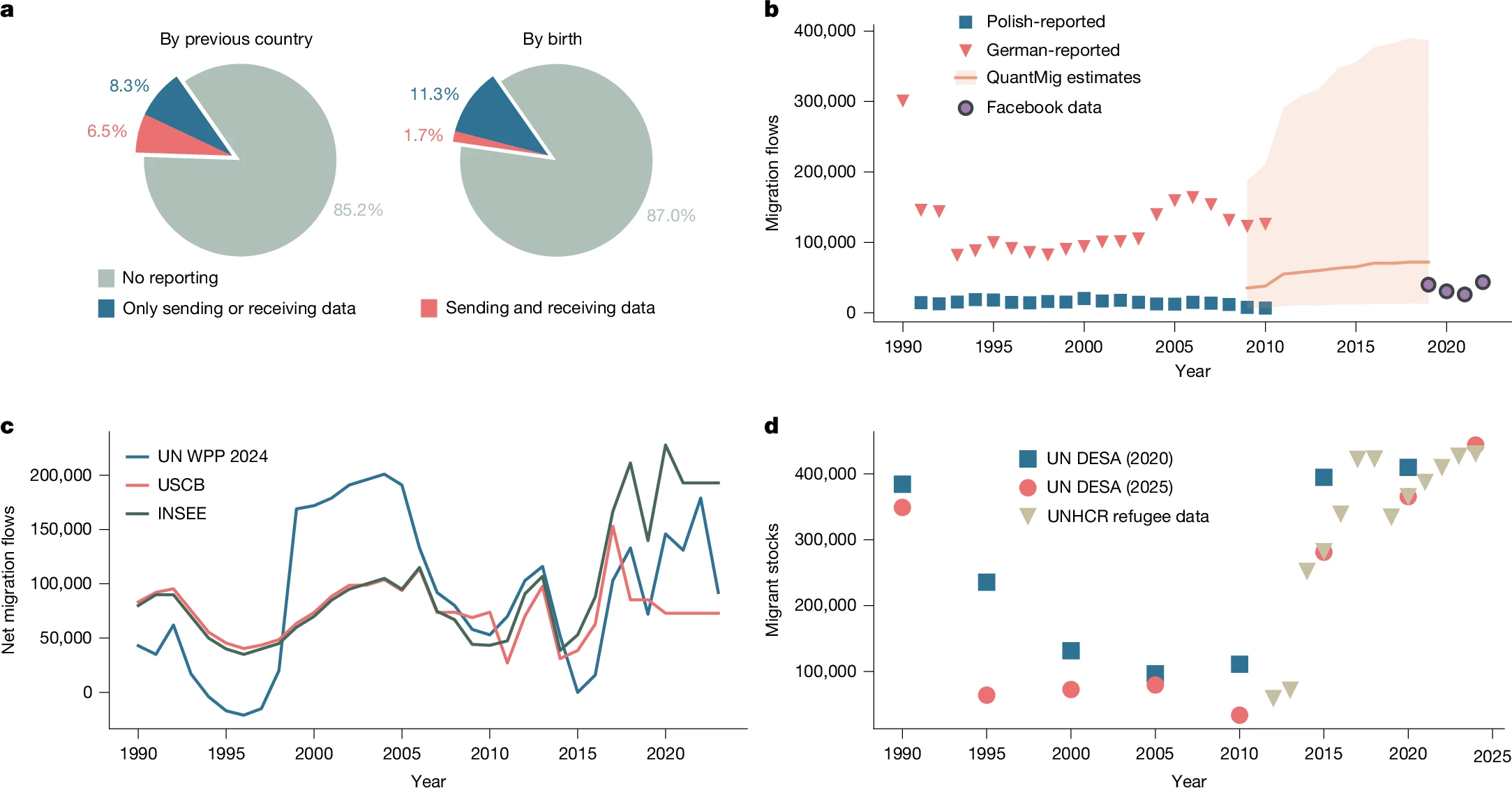
The dataset is the first comprehensive record of global migration flows covering the period from 1990 to 2023.
Accounting for movements that were incompletely or unreliably recorded was problematic, but the team found ways to adapt the algorithm to meaningfully use fragmented data from countries that lack full or reliable records.
“Always with this digital data, it goes in phases from the different data sources. There seems to be some source here or there, but you always have to piece together these fragmented sources,” Professor Abel explains.
Using Computational Social Science
In a previous comment about CSS, Professor Abel described the use of big data and machine learning algorithms to predict and understand social behaviour as one of the most exciting emerging trends in CSS, and he has been actively putting this ability into use.
“In the Nature paper, we use this deep learning method, so it’s very heavy on Computational Social Science,” he says.
Professor Abel’s work focuses on developing statistical techniques to quantify migration flows at the macro level, including analysing how flows change according to age, sex, education levels and other measures.
“We have measures on life expectancy, so it’s very highly correlated with the development of the country,” he says. “There’s a big literature on migration that talks about how migration is a kind of by-product of the relative development level of countries. People will try and move once they get to a certain stage – out of very low-level development, where they can’t afford to move. Once they get to a middle-income country stage, then they can move, but they will move to a more developed country.”
The new dataset is also flexible enough to measure rapid shifts of populations due to conflict, natural disasters and political instability, incidents that other major datasets were largely unable to include in their figures.
Global Migration Findings
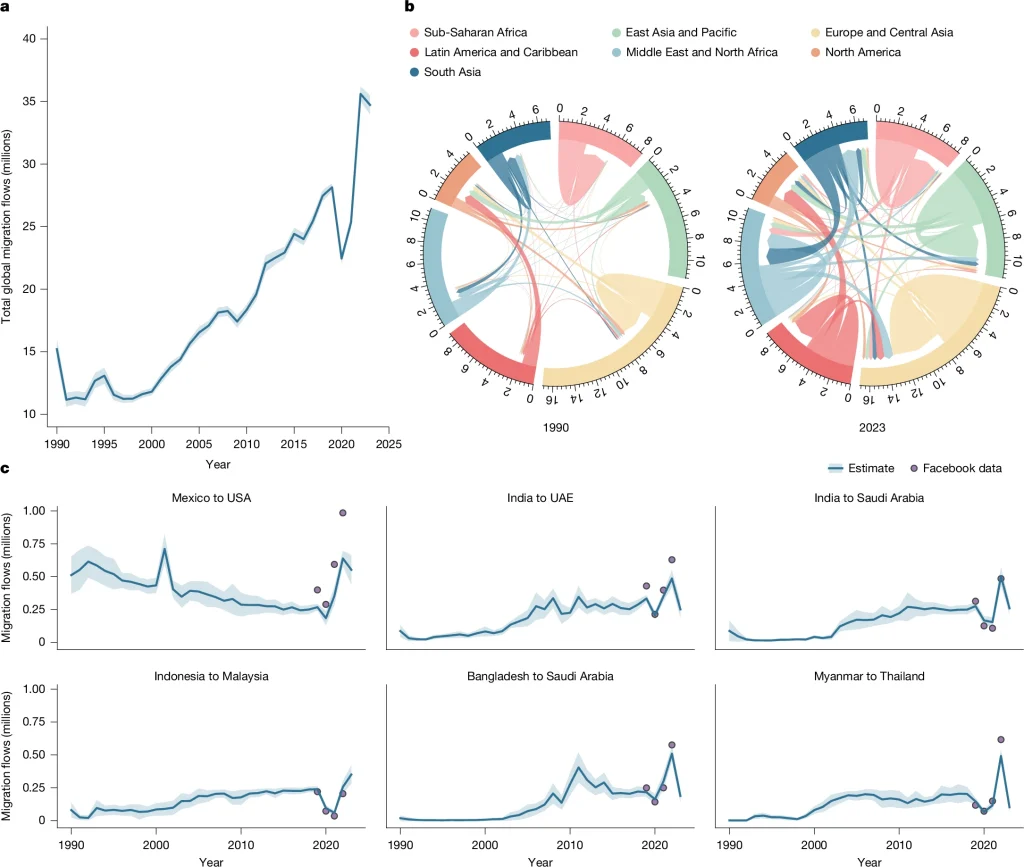
The results of the study show that overall, global migration levels are rising, he says.
“In the new study, we find, actually, people are becoming more migratory. Even when you account for the rise in the global population, we still see more migrants than we would expect if it was constant.”
The biggest global flow of people is to the Middle East, with migrants moving there mainly from South Asia and the Philippines.
According to Professor Abel, the primary driver of this migration is economic.
“The biggest flows we see are kind of regular migration flows, so people moving for work, usually, or they’re moving with partners for work,” he says. “Not really the sort of crisis migration that we often hear about a lot. The biggest flows are these labour flows, and the biggest labour flows are the ones going from South Asia, from countries like India. Bangladesh, Pakistan, to the Gulf States.”
The total flow reached approximately 19 million people in the years 2010-2023, dwarfing the estimated 13.9 million people who left Mexico for the United States in the period from 1990 to 2023.
HKU: The Right Place for Big Data Studies
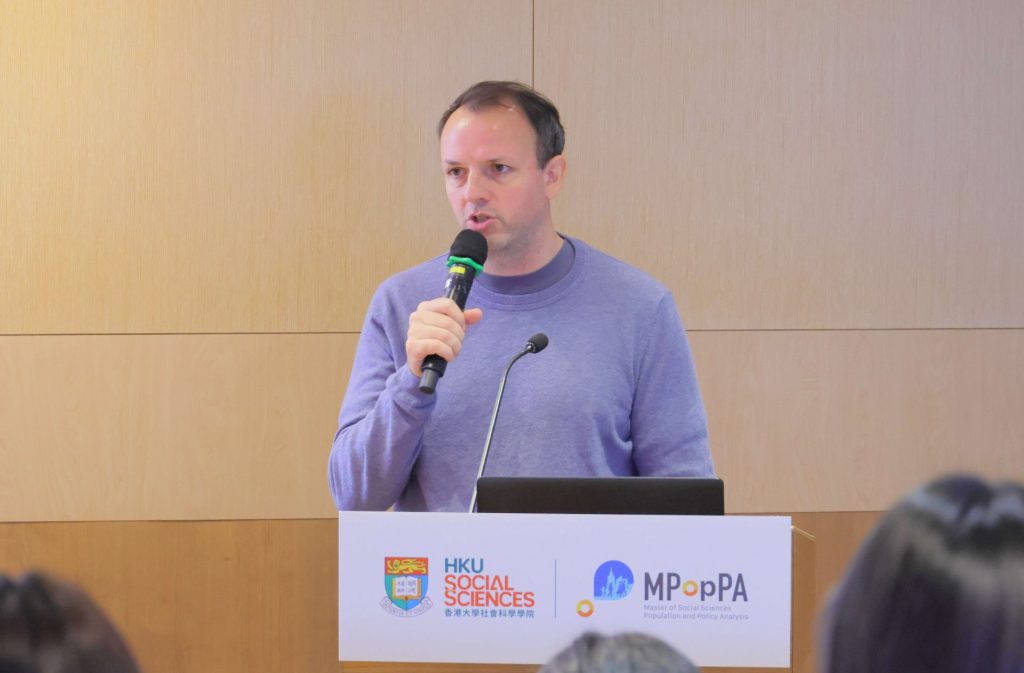
Professor Abel says The University of Hong Kong is the right place for his work. The opportunities to collaborate with specialists in demography, data science and big data means that he can integrate expertise across these areas to build more robust and comprehensive frameworks for measuring and understanding migration flows.
The dataset will help inform the work of other researchers in social science fields and beyond, he explains.
“If we have better data to put into our projections, we can get more accurate ways of projecting the populations forward for all countries. Usually, the projections are used by climate scientists, so this will hopefully provide a better basis by having more realistic scenarios, or knowing where populations are growing, where they’re shrinking, and seeing the impact on how that might influence the climate in the future.”
Another outcome of his work is a heightened interest in Computational Social Science and what it can achieve, which is stirring increased interest in quantitative research among PhD candidates, he says.
“We’re getting students that are really interested in quantitative methods, so they want to do their PhDs in something very quantitative, and in population-related studies as well.”
Contributing writer: Liana Cafolla